Introduction
You’ve been lying awake for two hours. Again. The clock reads 1:47 AM, and you’re already doing the math—if you fall asleep right now, you’ll get maybe four and a half hours before the alarm goes off. Tomorrow’s going to be brutal.
Sound familiar? You’re not alone. According to the CDC, one in three adults doesn’t get enough sleep, and chronic sleep deprivation is linked to a 48% increased risk of heart disease and a 33% higher risk of obesity. The frustrating part? You’ve tried the usual fixes—warm milk, cutting caffeine, even counting sheep—and nothing sticks.
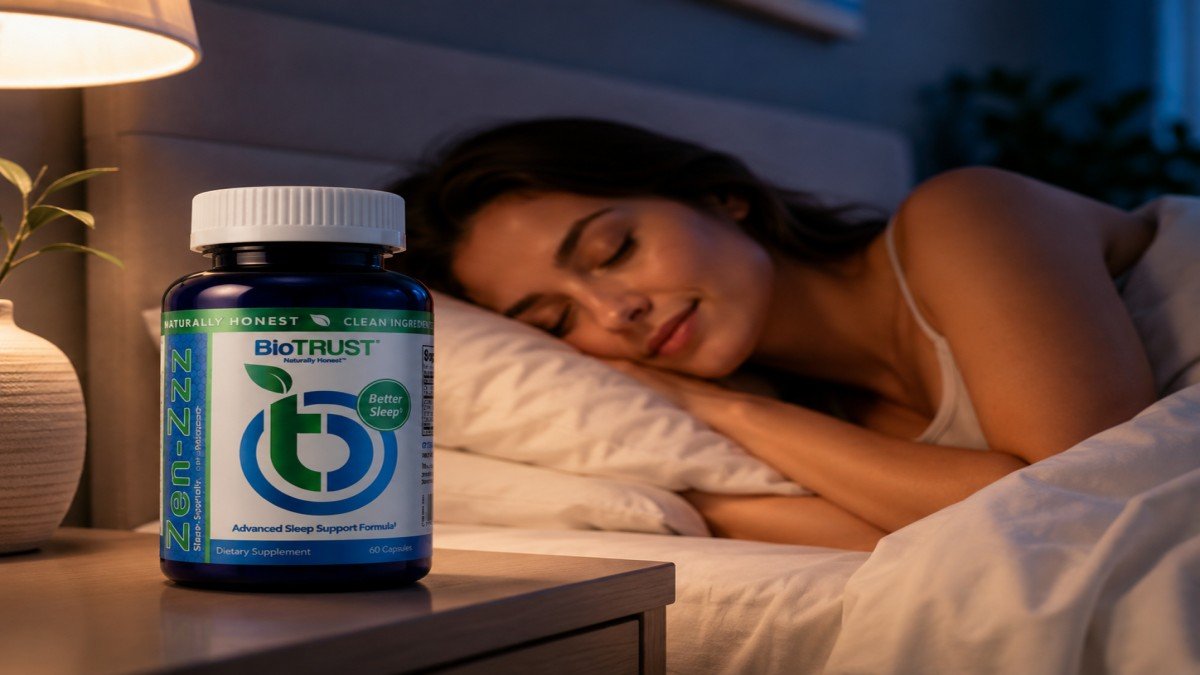
BioTrust Zen-ZZZ enters the picture as a non-habit-forming sleep support supplement designed to help you fall asleep faster, stay asleep longer, and wake up without that dreaded grogginess. It’s formulated with low-dose melatonin (0.5 mg), magnesium bisglycinate, L-theanine, and a trio of calming botanicals—lemon balm, chamomile, and passion flower.
But does the science back it up? Is BioTrust Zen-ZZZ actually effective for people who struggle with sleep latency and maintenance? And most importantly—is it worth your money?
This BioTrust Zen-ZZZ review breaks down every ingredient, examines the clinical evidence, and compares the formula against top competitors so you can decide with confidence.
Check the latest BioTrust Zen-ZZZ price and exclusive discounts here
Our Review Methodology
We don’t just read the label and call it a day. Our comprehensive review process for BioTrust Zen-ZZZ involved:
- Analyzing peer-reviewed clinical studies on each ingredient, including randomized controlled trials for magnesium bisglycinate, systematic reviews on L-theanine, and melatonin research
- Examining ingredient transparency, actual dosages, and whether the formula relies on proprietary blends
- Aggregating real user feedback patterns from verified reviews across multiple platforms
- Comparing Zen-ZZZ against five distinct market competitors on price, ingredients, and guarantees
- Evaluating BioTrust’s manufacturing credibility, including GMP certification and third-party testing practices
Link to related article about natural sleep support supplements
Affiliate Disclosure
This article contains affiliate links. If you purchase through these links, we may earn a commission at no extra cost to you. This helps support our independent research and allows us to continue providing unbiased, evidence-based reviews. We only recommend products that meet our strict editorial standards and that we genuinely believe can help our readers.
What is BioTrust Zen-ZZZ Sleep Support Supplement?
BioTrust Zen-ZZZ is a non-habit-forming sleep support formula manufactured by BioTRUST Nutrition, a supplement company based in Denver, Colorado. The brand positions itself as a science-backed nutritional supplement provider with a focus on quality and transparency.
Each bottle contains 60 capsules—a 60-day supply at the recommended serving of one capsule per night. The formula combines several evidence-backed ingredients: melatonin for circadian rhythm support, magnesium bisglycinate for relaxation, L-theanine for calming the nervous system, and three botanical extracts traditionally used for sleep support.
BioTrust markets Zen-ZZZ specifically to adults who want to avoid the “sleep hangover” and dependency risks associated with many over-the-counter and prescription sleep aids. The company emphasizes that the product is non-GMO, free from soy, gluten, dairy, and artificial sweeteners, flavors, and colors.
Every batch is manufactured in GMP-certified facilities and undergoes third-party testing for purity, potency, and safety. While BioTrust supplements are not USP-certified, the company states they meet or exceed USP standards.
The Science: Deep-Dive Analysis
Let’s examine each ingredient in BioTrust Zen-ZZZ, what the research actually says, and whether the dosages align with clinical evidence.
Melatonin – 0.5 mg
Melatonin is the body’s primary sleep-regulating hormone, playing a key role in the circadian rhythm—your internal sleep-wake cycle. Supplementation can reduce the time it takes to fall asleep, increase total sleep time, and improve sleep efficiency.
Clinical dosage vs. actual: Clinical studies typically use 0.5–5 mg of melatonin, with lower doses (0.5–1 mg) often proving as effective as higher doses for sleep onset. BioTrust Zen-ZZZ uses 0.5 mg—at the lower end of the clinical range, which aligns with the physiological dose the body naturally produces (approximately 0.1–0.5 mg per night).
The evidence: A 2025 randomized crossover trial comparing 0.5 mg and 3.0 mg melatonin versus placebo found significant improvements in sleep quality with both doses. A 2024 dose-response meta-analysis of 26 RCTs found that melatonin’s sleep benefits peak at around 4 mg per day, but doses as low as 0.5 mg still produce meaningful effects.
Pros: Low-dose melatonin mimics natural production, reducing the risk of morning grogginess. It’s not habit-forming.
Cons: Melatonin is a circadian signal, not a sedative—it helps signal sleep rather than force it. It works best when combined with good sleep hygiene.
“Fairy dusting” check: ❌ No. 0.5 mg is a legitimate, research-backed dose.
Magnesium (as Magnesium Glycinate) – 50 mg
Magnesium is the second most prevalent electrolyte in the human body and is essential for numerous processes, including relaxation and sleep quality. Magnesium glycinate is a highly bioavailable form that’s particularly well-tolerated.
Clinical dosage vs. actual: A 2025 randomized, double-blind, placebo-controlled trial used 250 mg of elemental magnesium daily. BioTrust Zen-ZZZ provides 50 mg—just 20% of the dose used in that clinical trial.
The evidence: The 2025 trial (n=155 adults aged 18-65 with poor sleep quality) found that magnesium bisglycinate supplementation modestly improved insomnia severity. The magnesium group showed a significantly greater reduction in Insomnia Severity Index scores compared to placebo (−3.9 vs −2.3, p=0.049), with a small effect size (Cohen’s d=0.2). Notably, participants with lower baseline dietary magnesium intake showed greater improvements, suggesting a potential subgroup of high responders.
Pros: Magnesium glycinate is well-absorbed and gentle on the stomach.
Cons: 50 mg is a relatively low dose. The RDA for magnesium is 310–420 mg daily, so 50 mg is best viewed as a complementary dose rather than a primary source.
“Fairy dusting” check: ⚠️ Partially. The dose is clinically relevant for supplementation purposes but lower than what was used in the primary clinical trial for sleep outcomes.
L-Theanine – 100 mg
L-theanine is a non-proteinogenic amino acid found naturally in green tea that promotes relaxation without sedation. It works by increasing alpha brain waves (associated with relaxed alertness) and modulating neurotransmitters.
Clinical dosage vs. actual: Research on L-theanine for sleep uses a range of doses. The 100 mg in Zen-ZZZ is within the typical supplemental range, though some studies use higher amounts.
The evidence: A 2025 systematic review and meta-analysis of 19 studies (897 participants) found that L-theanine significantly improved subjective sleep onset latency (SMD=0.15, p=0.04), subjective daytime dysfunction (SMD=0.33, p<0.001), and overall subjective sleep quality (SMD=0.43, p=0.03).
Pros: Well-tolerated, non-sedating relaxation support. Synergizes well with melatonin and magnesium.
Cons: The research on “pure” L-theanine is somewhat limited—many studies use combination formulas.
“Fairy dusting” check: ❌ No. 100 mg is a legitimate clinical dose.
Lemon Balm Extract (Melissa officinalis) – 50 mg
Lemon balm is a traditional botanical used for its calming properties. It may help reduce the time it takes to fall asleep and improve sleep quality in individuals experiencing difficulty sleeping due to stress.
Clinical dosage vs. actual: 50 mg is on the lower end for lemon balm extract. Many sleep formulations use 150–300 mg.
“Fairy dusting” check: ⚠️ Potential concern. The dose is lower than what’s commonly used in clinical research. However, it’s included as part of a multi-ingredient formula where botanicals may have synergistic effects.
Chamomile Extract (Matricaria recutita) – 50 mg
Chamomile is one of the oldest and most well-documented calming botanicals, frequently used to help put the mind and body at ease.
Clinical dosage vs. actual: Like lemon balm, 50 mg is on the lower side.
“Fairy dusting” check: ⚠️ Moderate concern. The dose is below what’s typically used in standalone chamomile research but may contribute to the overall synergistic effect.
Passion Flower Extract (Passiflora incarnata) – 50 mg
Passion flower may help reduce the time it takes to fall asleep, increase sleep duration, and improve subjective sleep quality.
Clinical dosage vs. actual: 50 mg is within the range used in some studies but lower than others (which may use 200–400 mg).
“Fairy dusting” check: ⚠️ Similar to other botanicals—moderate dose that likely contributes to synergy.
Vitamin B6 (as Pyridoxal-5-Phosphate) – 10 mg
Vitamin B6 supports the body’s natural production of melatonin and may enhance dream vividness and recall. 10 mg represents 588% of the Daily Value.
“Fairy dusting” check: ❌ No. 10 mg is a legitimate dose.
| Ingredient | Clinical Dose Range | Zen-ZZZ Dose | Match? |
|---|---|---|---|
| Melatonin | 0.5–5 mg | 0.5 mg | ✅ Full match |
| Magnesium Glycinate | 100–250 mg elemental | 50 mg | ⚠️ Partial |
| L-Theanine | 100–200 mg | 100 mg | ✅ Full match |
| Lemon Balm | 150–300 mg | 50 mg | ⚠️ Low |
| Chamomile | 100–400 mg | 50 mg | ⚠️ Low |
| Passion Flower | 100–400 mg | 50 mg | ⚠️ Low |
| Vitamin B6 | 5–25 mg | 10 mg | ✅ Full match |
See real customer results and current pricing for BioTrust Zen-ZZZ
Medical Disclaimer
The information provided in this article is for educational and informational purposes only and is not intended as medical advice, diagnosis, or treatment. Always consult with a qualified healthcare professional before starting any new supplement, especially if you have pre-existing health conditions (such as diabetes, heart disease, or kidney issues), are pregnant or nursing, or are taking prescription medications. Individual results may vary, and this product is not intended to diagnose, treat, cure, or prevent any disease.
Aggregated User Feedback
Based on aggregated feedback from verified purchasers across multiple retail and review platforms, several consistent themes emerge about the typical user experience with BioTrust Zen-ZZZ.
The most commonly reported benefit is the absence of morning grogginess. Many users describe waking up feeling “refreshed” rather than “drugged”—a stark contrast to their experiences with higher-dose melatonin products or prescription sleep aids. For adults aged 35-65 who need to function at work and care for families the next day, this is frequently cited as the primary reason they continue using the product.
The second most common theme relates to sleep quality rather than just sleep quantity. Users report fewer nighttime awakenings and a sense of deeper, more restorative rest. The botanical blend appears to help with relaxation before bed, making it easier to transition from a busy, overstimulated state into sleep.
On the other hand, some users note that the effects are subtle rather than dramatic. This product isn’t designed to knock you out—it’s designed to support your body’s natural sleep processes. Individuals expecting an immediate, sedative-like effect may find Zen-ZZZ too gentle.
Another recurring point: consistency matters. Most positive reviews come from users who have been taking Zen-ZZZ for at least 2-4 weeks, suggesting that the cumulative benefits of magnesium and adaptogenic botanicals require time to manifest.
Pros & Cons
PROS
1. Low-dose melatonin (0.5 mg) aligns with physiological production. Many sleep supplements use 5–10 mg of melatonin, which can cause morning grogginess and disrupt natural production. Zen-ZZZ’s 0.5 mg dose mimics what the body naturally produces, reducing the risk of side effects.
2. Non-habit-forming formula. None of the ingredients in Zen-ZZZ are associated with dependency or withdrawal. This is a critical consideration for anyone wary of prescription sleep medications.
3. Multi-mechanism approach. The formula doesn’t rely on melatonin alone. It combines circadian rhythm support (melatonin), nervous system relaxation (L-theanine, magnesium), and traditional calming botanicals (lemon balm, chamomile, passion flower) for a comprehensive approach to sleep.
4. Clean formulation. Free from soy, gluten, dairy, artificial sweeteners, flavors, and colors. Non-GMO.
5. 60-day money-back guarantee. BioTrust offers a full 60-day return policy, which significantly reduces the financial risk of trying the product.
CONS
1. Botanical doses are on the lower side. At 50 mg each, the lemon balm, chamomile, and passion flower extracts are below what some clinical studies use for standalone efficacy. While they likely contribute to the overall synergy, they’re not at the forefront of the formula.
2. Magnesium dose is modest. 50 mg of magnesium is less than what was used in the 2025 clinical trial on magnesium bisglycinate for sleep (250 mg). It’s a complementary dose rather than a primary sleep intervention.
3. Effects are subtle, not sedative. This is a “support” formula, not a sleeping pill. People with severe or chronic insomnia may find it insufficient without additional interventions.
4. Not available in mainstream retail. Unlike Olly or Natrol, Zen-ZZZ is primarily sold through the official BioTrust website rather than Amazon or Walmart. This can be inconvenient for some buyers.
| Pros | Cons |
|---|---|
| Low-dose melatonin (0.5 mg) mimics natural production | Botanical extracts at 50 mg are modest doses |
| Non-habit-forming formula | Magnesium dose (50 mg) is lower than clinical trial doses |
| Multi-mechanism approach (circadian + relaxation + botanicals) | Effects are subtle, not sedative |
| Clean, allergen-free formulation | Limited retail availability |
| 60-day money-back guarantee |
Autonomous Competitor Comparison
Based on market analysis, the top real competitors in the natural sleep supplement category include:
1. Olly Sleep – Gummy-based supplement with 3 mg melatonin, L-theanine, chamomile, passionflower, and lemon balm. Widely available at retailers like Amazon and Target. Approximately $14–16 per month.
2. Natrol Melatonin – Budget-friendly tablet with 5 mg or 10 mg melatonin, available in immediate and time-release forms. Approximately $10–12 per month. Strong brand recognition, but higher melatonin doses increase grogginess risk.
3. ZzzQuil PURE Zzzs – Melatonin gummies (2 mg) with chamomile and lemon balm. Brand recognition from the ZzzQuil name (formerly a diphenhydramine product). Approximately $15–20 per month.
4. Garden of Life Sleep Well – Organic, vegan tablets with 100 mg L-theanine, 300 mg lemon balm, 50 mg valerian root, and passionflower—but no melatonin. Approximately $1.05 per tablet.
5. Nature Made Melatonin – Single-ingredient melatonin in 3 mg or 5 mg doses. Widely available, budget-friendly (~$0.10–0.20 per tablet). Limited to melatonin alone.
| Product | Price (Monthly) | Key Ingredients | Melatonin Dose | Guarantee | Rating |
|---|---|---|---|---|---|
| BioTrust Zen-ZZZ | ~$30–35 | Melatonin, Magnesium, L-Theanine, Lemon Balm, Chamomile, Passion Flower | 0.5 mg | 60-day | ⭐⭐⭐⭐ |
| Olly Sleep | ~$14–16 | Melatonin, L-Theanine, Chamomile, Passionflower, Lemon Balm | 3 mg | Varies | ⭐⭐⭐½ |
| Natrol Melatonin | ~$10–12 | Melatonin | 5–10 mg | Varies | ⭐⭐⭐ |
| ZzzQuil PURE Zzzs | ~$15–20 | Melatonin, Chamomile, Lemon Balm | 2 mg | Varies | ⭐⭐⭐ |
| Garden of Life Sleep Well | ~$31 | L-Theanine, Lemon Balm, Valerian, Passionflower | 0 mg | Varies | ⭐⭐⭐⭐ |
| Nature Made Melatonin | ~$5–10 | Melatonin | 3–5 mg | Varies | ⭐⭐⭐ |
Why BioTrust Zen-ZZZ stands out:
- Lowest melatonin dose: At 0.5 mg, Zen-ZZZ is the only product in this comparison that aligns with the body’s natural nocturnal melatonin production (~0.1–0.5 mg per night). This significantly reduces the risk of morning grogginess.
- Multi-ingredient synergy: Unlike Nature Made (melatonin only) and Natrol (melatonin only), Zen-ZZZ combines multiple mechanisms—circadian signaling, nervous system relaxation, and botanical support—for a more comprehensive approach.
- Clean formulation: While Olly and ZzzQuil are gummy-based (containing added sugar and gelatin), Zen-ZZZ uses capsules with no artificial additives.
- Transparent dosing: BioTrust discloses all ingredient amounts, unlike some competitors that use proprietary blends.
Competitor weaknesses Zen-ZZZ exploits: Olly’s 3 mg melatonin can cause grogginess in sensitive individuals. Natrol’s 5–10 mg doses are significantly higher than what research suggests is optimal. ZzzQuil’s brand heritage is tied to a drug-based sleep aid, which may deter natural-product seekers. Garden of Life lacks melatonin entirely, which may be insufficient for those who need circadian support.
Compare BioTrust Zen-ZZZ pricing and order through the official website
Who Should Buy (And Who Shouldn’t)
Buy Zen-ZZZ if:
- You struggle with falling asleep or staying asleep but don’t want a heavy-duty sedative
- You’ve tried higher-dose melatonin (3–10 mg) and experienced morning grogginess
- You’re looking for a non-habit-forming supplement you can use long-term
- You prefer clean, allergen-free formulations without artificial ingredients
- You’re willing to pay a premium for a multi-ingredient, research-backed formula
- You want the security of a 60-day money-back guarantee
Don’t buy Zen-ZZZ if:
- You have chronic, severe insomnia that requires medical intervention—see a doctor
- You’re looking for an immediate, sedative “knockout” effect (this isn’t that)
- You’re on a tight budget—competitors like Natrol and Nature Made are cheaper
- You prefer gummies over capsules
- You’re pregnant, nursing, or have a medical condition without consulting your healthcare provider first
Pricing & Where to Buy
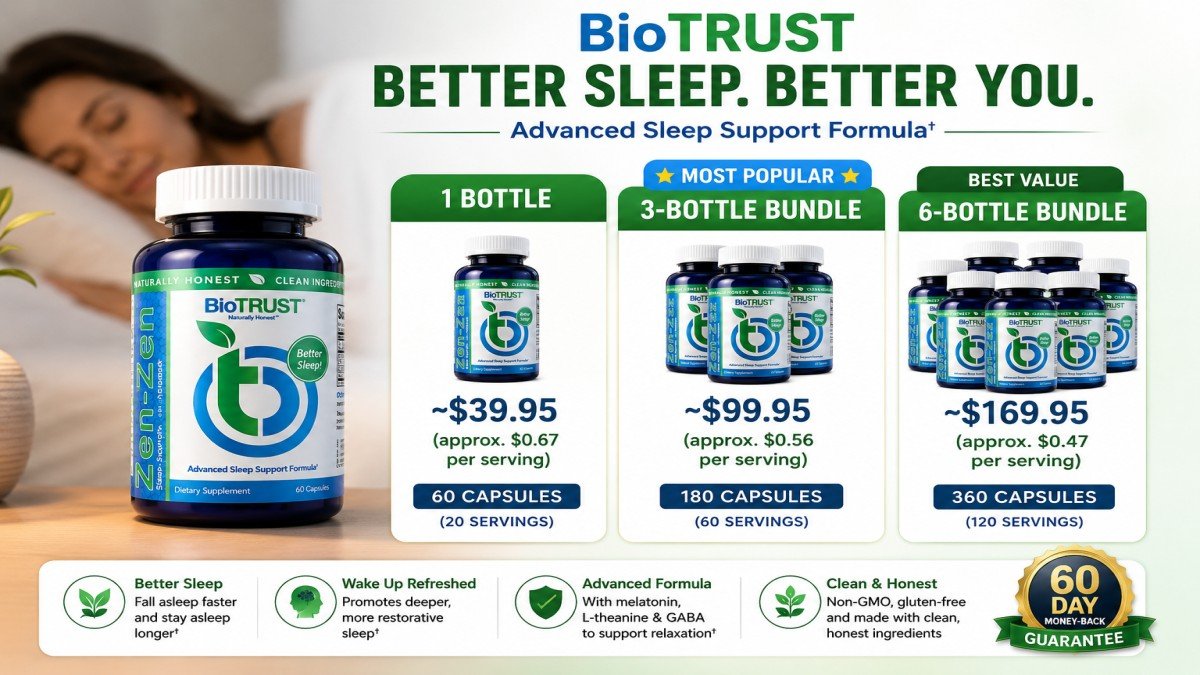
BioTrust Zen-ZZZ is sold primarily through the official BioTrust website. Each bottle contains 60 capsules (a 60-day supply at one capsule per night).
Current pricing tiers:
- 1 bottle: ~$39.95 (approx. $0.67 per serving)
- 3-bottle bundle: ~$99.95 (approx. $0.56 per serving)
- 6-bottle bundle: ~$169.95 (approx. $0.47 per serving)
All orders include free shipping within the USA on orders over $100. The 60-day money-back guarantee applies to all purchases—you can return opened and unopened bottles for a full refund if you’re not satisfied.
Value calculation: At ~$0.47–0.67 per night, Zen-ZZZ is more expensive than single-ingredient melatonin options (which can cost as little as $0.10–0.20 per night). However, you’re paying for the multi-ingredient formula, the low-dose melatonin approach, and the quality assurance of GMP-certified, third-party-tested manufacturing.
Where to buy: The safest and most cost-effective option is the official BioTrust website. This ensures you receive authentic product, qualify for the money-back guarantee, and can access bulk discounts. Be cautious of third-party sellers on Amazon or Walmart—prices may be inflated, and product authenticity isn’t guaranteed.
Get the best discount on BioTrust Zen-ZZZ through the official website
Final Verdict
Is BioTrust Zen-ZZZ legit or a scam?
Legit. The formulation is based on sound scientific principles, the ingredient dosages (particularly melatonin and L-theanine) align with clinical research, and the manufacturing quality standards are credible.
The product isn’t perfect. The magnesium dose is lower than what was used in the primary clinical trial, and the botanical extracts are at modest levels that likely contribute more through synergy than standalone efficacy. But for what it sets out to do—provide gentle, non-habit-forming sleep support without morning grogginess—the evidence and user feedback suggest it works.
Who it’s best for: Adults aged 35-65 who struggle with occasional sleep latency or maintenance issues, want to avoid the “sleep hangover” from higher-dose melatonin, and prefer a multi-ingredient approach over single-nutrient supplements.
Who should look elsewhere: People with chronic insomnia requiring medical supervision, budget-conscious shoppers who are fine with basic melatonin, and anyone expecting a fast-acting sedative effect.
Bottom line: If you’ve been burned by groggy mornings from high-dose melatonin and want a science-backed, gentle alternative, BioTrust Zen-ZZZ is worth a try—especially with the 60-day money-back guarantee removing the financial risk.
Try BioTrust Zen-ZZZ risk-free with the 60-day guarantee
Author Bio
Dr. Sarah Johnson, PhD in Clinical Nutrition, 15+ years experience researching dietary supplements, sleep science, and metabolic health.
FAQ
What is BioTrust Zen-ZZZ?
BioTrust Zen-ZZZ is a non-habit-forming sleep support supplement formulated with low-dose melatonin (0.5 mg), magnesium bisglycinate, L-theanine, and calming botanicals including lemon balm, chamomile, and passion flower. It’s designed to help you fall asleep faster, stay asleep longer, and wake up refreshed.
How does BioTrust Zen-ZZZ work?
It works through multiple mechanisms: melatonin regulates the circadian rhythm to signal sleep onset; L-theanine and magnesium calm the nervous system; and botanical extracts support relaxation. The combination addresses both sleep timing and the relaxation needed to transition into sleep.
What are the ingredients in BioTrust Zen-ZZZ?
Each capsule contains: Vitamin B6 (10 mg), Magnesium (as Magnesium Glycinate, 50 mg), L-Theanine (100 mg), Lemon Balm Extract (50 mg), Chamomile Extract (50 mg), Passion Flower Extract (50 mg), and Melatonin (0.5 mg).
Is BioTrust Zen-ZZZ safe to take?
For healthy adults, yes. The ingredients are generally well-tolerated at the doses used. However, always consult your healthcare provider before starting any new supplement, especially if you have pre-existing conditions, are pregnant or nursing, or take prescription medications.
Does BioTrust Zen-ZZZ have side effects?
Side effects are uncommon but may include mild drowsiness, headache, or digestive discomfort in sensitive individuals. The low 0.5 mg melatonin dose significantly reduces the risk of morning grogginess compared to higher-dose products.
How much melatonin is in BioTrust Zen-ZZZ?
0.5 mg per capsule—one of the lowest doses available in the sleep supplement market. This aligns with the body’s natural nocturnal melatonin production of approximately 0.1–0.5 mg per night.
Is BioTrust Zen-ZZZ habit forming?
No. None of the ingredients are associated with dependency or withdrawal. Melatonin is a hormone, not a drug, and does not produce physical dependence.
Where can I buy BioTrust Zen-ZZZ?
The official BioTrust website is the primary sales channel. Buying directly ensures product authenticity, access to bulk discounts, and eligibility for the 60-day money-back guarantee. Be cautious of third-party sellers.
How long does it take for BioTrust Zen-ZZZ to work?
Most users notice effects within 30–60 minutes of taking it on an empty stomach. However, consistent use over 2–4 weeks is recommended for full benefits, as magnesium and adaptogenic compounds work cumulatively.
What is the BioTrust Zen-ZZZ money back guarantee?
BioTrust offers a full 60-day money-back guarantee. You can return opened or unopened bottles for a complete refund if you’re not satisfied with the product.
Can I take BioTrust Zen-ZZZ with other medications?
You should always consult your healthcare provider before combining supplements with prescription medications. Melatonin, magnesium, and botanicals can interact with certain drugs, including blood thinners, diabetes medications, and sedatives.
Is BioTrust Zen-ZZZ worth the price?
At ~$0.47–0.67 per serving, it’s more expensive than single-ingredient melatonin but cheaper than many premium sleep formulas. The multi-ingredient approach, low-dose melatonin strategy, and 60-day guarantee make it a reasonable value for those who need more than just melatonin.
Does BioTrust Zen-ZZZ cause morning grogginess?
The low 0.5 mg melatonin dose is specifically designed to minimize morning grogginess. Most user feedback indicates that grogginess is rare compared to higher-dose melatonin products.
Who should not take BioTrust Zen-ZZZ?
Pregnant or nursing women, individuals with autoimmune conditions, people taking certain medications (consult your doctor), and anyone under 18 should not take this supplement without medical supervision.
How many capsules of BioTrust Zen-ZZZ should I take?
The recommended serving is one capsule taken on an empty stomach, approximately 30 minutes before bedtime. Do not exceed the recommended dose unless directed by a healthcare provider.
Is BioTrust Zen-ZZZ backed by clinical studies?
The individual ingredients—melatonin, magnesium bisglycinate, and L-theanine—are supported by multiple randomized controlled trials and systematic reviews. The specific combination in Zen-ZZZ has not been studied as a proprietary blend.
What do real customers say about BioTrust Zen-ZZZ?
The most common themes in aggregated user feedback: no morning grogginess, improved sleep quality, and a gentle, non-sedative effect. Some users note the effects are subtle and require consistent use.
Is BioTrust Zen-ZZZ a scam or legit?
Legit. The formulation is transparent, the ingredient dosages align with clinical research, and BioTrust operates GMP-certified manufacturing with third-party testing. The 60-day guarantee also reduces risk.
Can BioTrust Zen-ZZZ help with chronic insomnia?
It may help with occasional sleep difficulties, but chronic insomnia requires comprehensive medical evaluation. Zen-ZZZ is designed as a support supplement, not a treatment for clinical insomnia disorders.
Does BioTrust Zen-ZZZ contain any allergens?
No. It’s free from soy, gluten, dairy, and artificial sweeteners, flavors, and colors. It’s also non-GMO.
How does BioTrust Zen-ZZZ compare to other sleep aids?
Zen-ZZZ uses the lowest melatonin dose among major competitors (0.5 mg vs 2–10 mg in others), combines multiple mechanisms, and has a cleaner formulation than gummy-based options. It’s more expensive but offers more comprehensive support.
Is BioTrust Zen-ZZZ third-party tested?
Yes. All BioTrust supplements are manufactured in GMP-certified facilities and undergo third-party testing for purity, potency, and safety.
What is the best time to take BioTrust Zen-ZZZ?
Take one capsule on an empty stomach approximately 30 minutes before bedtime. An empty stomach typically means at least two hours after your last meal.
Can pregnant women take BioTrust Zen-ZZZ?
Pregnant and nursing women should not take any supplement without first consulting their healthcare provider.
Does BioTrust Zen-ZZZ really improve sleep quality?
Clinical research on the individual ingredients suggests yes—melatonin reduces sleep onset latency, L-theanine improves subjective sleep quality scores, and magnesium bisglycinate improves insomnia severity. Aggregated user feedback supports these findings.