Introduction
You just clocked out after a brutal 10-hour shift. Your feet throb, and when you look down, your ankles look like they belong to someone else. It’s a miserable feeling.
If you want to know how to reduce ankle swelling after standing for long hours at work, you need to attack the problem from two sides. You need immediate relief tonight. And you need prevention tomorrow.
Gravity pulls fluid down into your lower legs all day. Let’s fix that.
Why Your Ankles Blow Up Like Balloons
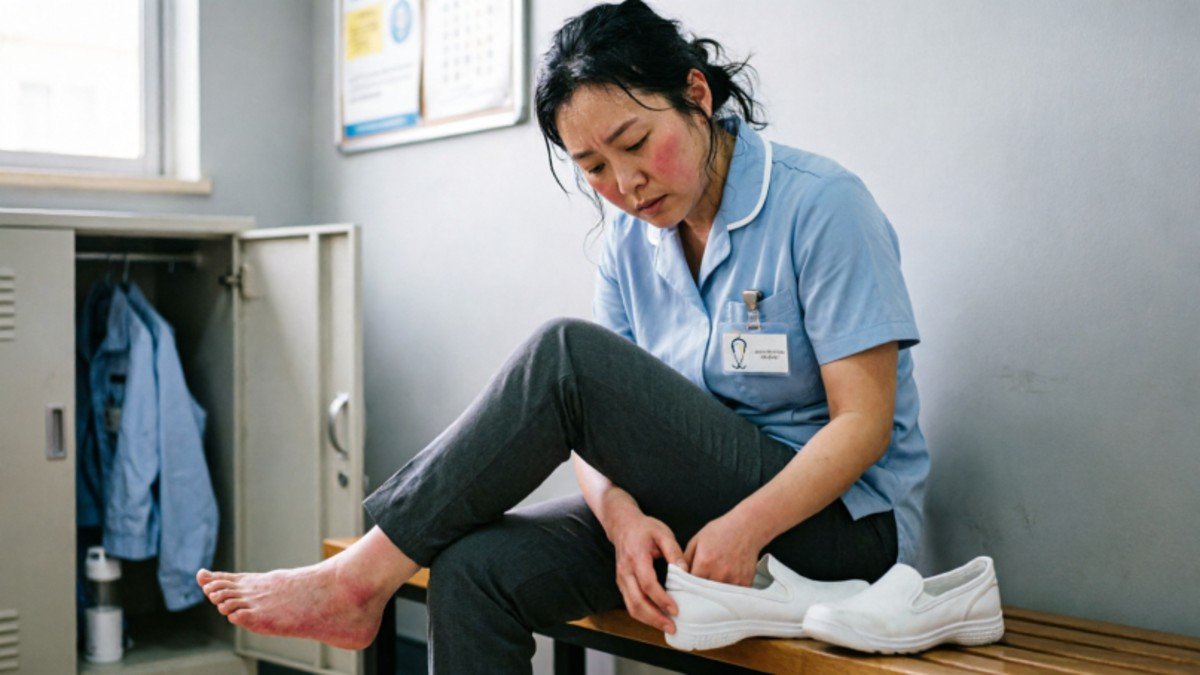
Blood pools when you stand still. Your veins have tiny valves that push blood back up to your heart. But after eight hours on concrete floors, those valves get tired.
Fluid leaks out of those tiny blood vessels. It sinks into the surrounding tissue. That trapped fluid is what causes the visible puffiness and the tight feeling in your shoes.
6 Fast Ways to Drain the Fluid Tonight
You don’t need fancy equipment to get relief. You just need to help gravity do its job. Here are the fastest ways to get the fluid moving back toward your heart.
| Relief Method | Time Needed | How It Works |
|---|---|---|
| Legs Up the Wall | 15-20 mins | Lying on your back with legs straight up a wall forces fluid to drain back to your core. |
| Cool Water Soak | 10 mins | Cool water constricts blood vessels, which helps push pooled fluid out of the tissues. |
| Upward Massage | 5-10 mins | Using lotion, stroke firmly from your toes up toward your knees to manually move the fluid. |
| Calf Stretching | 5 mins | Stretching the calf muscle acts like a pump to squeeze fluid out of the lower leg. |
| Epsom Salt Bath | 20 mins | Magnesium sulfate may help relax tight muscles and draw out excess fluid. |
| Hydration Flush | Ongoing | Drinking a large glass of water signals your body to stop hoarding fluid in your legs. |
People think soaking in hot water helps swelling. It actually makes it worse by opening up blood vessels and letting more fluid pool. Stick to cool water or just elevate.” — Dr. Aris Thorne, Vascular Specialist
Gear That Stops the Puffiness Before It Starts
You can’t always control your shift length. But you can control what you wear. The right gear acts like a second set of muscles for your veins.
Compression Socks
These are non-negotiable if you stand all day. They apply gentle pressure to your legs. This keeps your blood vessels from expanding and pooling blood.
| Sock Type | Pressure Level | Best For |
|---|---|---|
| Everyday Support | 15-20 mmHg | Mild swelling, prevention, long retail shifts. |
| Medical Grade | 20-30 mmHg | Severe swelling, nurses, factory workers, varicose veins. |
| Athletic Recovery | Varies | Post-shift wear to speed up fluid drainage. |
Footwear Checklist
Your shoes are your foundation. Flat, unsupportive shoes make the swelling much worse.
| Shoe Feature | Good or Bad? | Why It Matters |
|---|---|---|
| Zero Drop (Completely Flat) | Bad | Puts massive strain on your Achilles and calf pumps. |
| Slight Heel Drop (4-8mm) | Good | Takes pressure off the lower leg and helps blood flow. |
| Wide Toe Box | Good | Lets your toes spread and grip, activating foot muscles. |
| Memory Foam Only | Bad | Bottoms out after two hours, leaving you with zero support. |
I tell my nursing staff to treat compression socks like part of their uniform. If you put them on before you get out of bed, you stop the swelling before it even starts.” — Sarah Jenkins, Occupational Health Nurse
On-the-Clock Micro-Movements
You might not be able to sit down. But you can still move. Doing these small movements behind the register or on the factory line keeps your calf muscles engaged.
| Movement | How to Do It | When to Do It |
|---|---|---|
| Calf Raises | Slowly lift your heels off the ground, then lower. | Every 30 minutes while standing in one spot. |
| Ankle Alphabet | Lift one foot and trace the letters A-Z with your big toe. | When you have a brief lull in customers or workflow. |
| Heel-to-Toe Rocks | Shift your weight from your heels to your toes repeatedly. | While waiting in line or talking to a coworker. |
| Marching in Place | Lift your knees slightly higher than a normal walking step. | During a quick 2-minute bathroom break. |
Hydration and Salt: The Hidden Culprits
What you put in your body matters just as much as what you put on your feet.
| Nutrient/Food | Action | Why It Helps |
|---|---|---|
| Plain Water | Drink 8+ glasses daily | Flushes excess sodium and stops your body from hoarding fluid. |
| Potassium-Rich Foods | Eat bananas, spinach, avocados | Balances out sodium levels in your cells, reducing water retention. |
| Magnesium | Take a supplement or eat nuts | Helps regulate fluid balance and prevents muscle cramping. |
| High-Sodium Foods | Avoid fast food and canned soups | Causes your body to hold onto massive amounts of water weight. |
Most guys and gals on their feet all day drink way too much coffee and not enough plain water. Caffeine is fine, but if you’re dehydrated, your body hoards water right in your lower legs.” — Mark Davies, Sports Nutritionist
Your Game Plan on How to Reduce Ankle Swelling After Standing for Long Hours at Work
Consistency is everything. You can’t just do this once and expect miracles.
- Morning: Put on your compression socks before your feet even hit the floor. Drink a large glass of water.
- Shift: Do your micro-movements. Rock heel-to-toe. Drink water constantly.
- Evening: Take off your shoes. Elevate your legs above your heart for 20 minutes. Do an upward massage.
Stick to this routine for two weeks. You will see a massive difference.
Red Flags: When Swelling Isn’t Just “Standing”
Sometimes, puffy ankles are a warning sign. You need to know when to stop reading blogs and go see a doctor.
| Symptom | What It Might Mean | Action to Take |
|---|---|---|
| Swelling in only ONE leg | Deep Vein Thrombosis (blood clot). | Go to the ER immediately. This is life-threatening. |
| Pitting edema (pressing leaves a dent) | Heart, kidney, or liver strain. | Schedule an urgent doctor’s appointment. |
| Red, hot, or painful skin | Infection (cellulitis) or clot. | Seek immediate medical care. |
| Shortness of breath with swelling | Heart failure or pulmonary issue. | Call emergency services right away. |
Key Takeaways
✓ Gravity causes fluid to pool in your lower legs when you stand still for hours. ✓ Elevating your legs above your heart for 20 minutes is the fastest way to drain fluid. ✓ Wearing 15-20 mmHg compression socks during your shift prevents the swelling from starting. ✓ Avoid hot water soaks, as heat expands blood vessels and makes puffiness worse. ✓ Drinking more water actually signals your body to release trapped fluid. ✓ Calf raises and ankle circles behind the register keep your internal pumps working. ✓ Seek immediate medical help if only one leg swells or if the skin feels hot to the touch.
FAQ
Q: What causes ankle swelling after standing all day? A: Gravity is the main culprit. When you stand still, blood pools in your lower legs. Your veins have to fight gravity to push that blood back to your heart. Over time, fluid leaks out of those tiny blood vessels and into the surrounding tissue. That trapped fluid is what causes the visible puffiness and tight feeling in your shoes.
Q: Does drinking water actually help reduce foot puffiness naturally? A: It sounds backward, but yes. When you are dehydrated, your body panics and hoards whatever water it has left. It stores that backup fluid right in your lower extremities. Drinking plenty of plain water flushes out excess sodium and tells your body it is safe to release that trapped fluid. Aim for at least eight glasses a day.
Q: How high should I elevate my legs? A: For the best results, your ankles need to be above the level of your heart. Lying flat on the floor and resting your legs up against a wall is the easiest way to do this. If you just prop them up on a footstool while sitting on the couch, gravity won’t be able to drain the fluid effectively.
Q: Are compression socks safe to wear every single day? A: Yes, for most people, daily wear is perfectly safe and highly recommended for workers on their feet. Just make sure they fit correctly. They should feel snug but not painfully tight. Take them off before you go to sleep so your skin can breathe and your circulation can normalize overnight.
Q: Can I use ice or heat for swollen ankles? A: Stick to cool or cold treatments. Heat expands your blood vessels, which allows even more fluid to leak into the tissues and makes the swelling worse. A cool damp towel, a cold water soak, or an ice pack wrapped in a cloth will constrict the vessels and help push the fluid out of the area.
Q: What shoes are best for standing 8+ hours? A: You need shoes with a slight heel drop (where the heel is slightly higher than the toe) and a wide toe box. Avoid completely flat shoes like Converse or Vans, as they put massive strain on your calves. Look for running or walking shoes with firm arch support and a thick, shock-absorbing midsole.
Q: Is ankle swelling a sign of heart problems? A: It can be. While standing all day is the most common cause, persistent swelling that doesn’t go away after a night of sleep can indicate that your heart isn’t pumping efficiently. If you also experience shortness of breath, chest pain, or extreme fatigue, you need to see a doctor right away to rule out cardiovascular issues.
Q: How long does it take for the swelling to go down? A: If it is just from a long shift, elevating your legs for 20 to 30 minutes should drastically reduce the swelling. The tight feeling in your shoes should disappear overnight while you sleep horizontally. If you wake up and your ankles are still heavily swollen, you need to consult a healthcare professional.
Q: Does walking help or hurt swollen ankles? A: Walking actually helps. The act of walking forces your calf muscles to contract and relax. This acts like a mechanical pump, squeezing the veins and pushing blood and fluid back up toward your heart. A brisk 15-minute walk after your shift can do wonders for draining heavy legs.
Q: Should I take magnesium for swollen feet? A: Magnesium is great for muscle cramps and overall cellular function. It also helps regulate fluid balance in the body. If your diet is lacking in magnesium, a supplement might help reduce mild water retention. But it won’t fix the mechanical issue of gravity pooling blood in your legs during a 10-hour shift.
Q: Can losing weight reduce ankle swelling? A: Yes. Carrying extra body weight puts significantly more physical pressure on your joints, veins, and circulatory system. It forces your heart to work harder to pump blood out of your lower extremities. Losing even a modest amount of weight can take a massive load off your venous system and reduce daily swelling.
Q: Why is only one ankle swollen? A: Swelling in just one leg is a major red flag. It usually points to a localized issue rather than a systemic one. The most dangerous cause is a Deep Vein Thrombosis (DVT), which is a blood clot in the leg. It could also be an infection or a joint injury. Do not ignore this. See a doctor immediately.
Final Thoughts
Standing all day takes a massive toll on your body. But you don’t have to accept puffy, painful ankles as just “part of the job.” By combining the right gear, smart hydration, and a solid evening routine, you can take your comfort back. Listen to your body, respect the red flags, and give your legs the recovery they deserve.